Two New Must-Read LGBTQ-Inclusive Middle Grade Novels
Even as LGBTQ-inclusive kids' books are facing attempted bans across the U.S., such books are increasing in number–and as two recent middle-grade novels show, the quality of many is second to none. Both are coming-of-age stories; one is set during the height of the U.S. AIDS epidemic, with a background of anti-LGBTQ injustice; the other is not "about" LGBTQ issues per se, but includes several LGBTQ characters whose experiences strengthen the book's theme of choosing one's own fate and family.
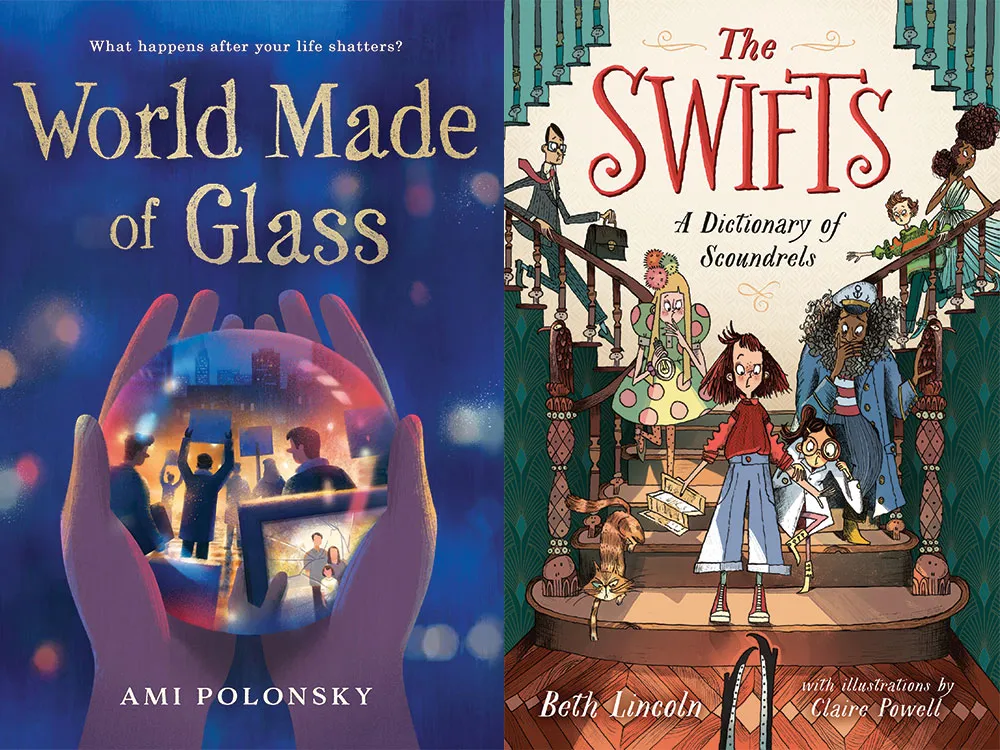
In Ami Polonsky's World Made of Glass (Little, Brown), seventh-grader Iris Cohen's dad is dying from complications of AIDS. He came out as gay a year ago and her parents divorced, but they are amicably co-parenting. Iris and her dad are close, and share their feelings via acrostic poems, a literary device that Polonsky uses to moving effect. Iris hates his boyfriend J.R., though, the person who (unwittingly) gave him the virus.
Iris has kept her dad's illness a secret from people at school–being teased when classmates learned he was gay was bad enough–but word soon leaks out. When her dad dies, Iris grapples with grief and rage as well as a deepening awareness of the bias and fear surrounding the disease.
Gradually, though, her feelings towards J.R. change, and through him, she learns of her dad's activism in the burgeoning ACT UP group that is pushing for stronger action against the disease. Supported by several close friends, including one boy who becomes a first crush, Iris becomes involved in the group as well, which helps her process and channel her grief in a way that lets her move forward.
Polonsky skillfully weaves in historical moments and figures (notably Dr. Anthony Fauci, whose relationship with AIDS activists was sometimes contentious). Polonsky also thoughtfully shows ACT UP members in the process of figuring out what their organization should do and how to do it–a nuanced look at the birth pangs of any social justice movement. The focus, however, is on one girl's response to a family tragedy, not a history of AIDS activism, even as it reminds us of the very personal reasons for such activism. (An Author's Note adds more historical details for those who want them.)
The book shines a light on an era of LGBTQ history while reminding us that out queer people have been raising children for decades, and that anti-LGBTQ actions harm them as well. Polonsky conveys this via a heart-wrenching story of loss and personal growth–a tale also remarkably imbued with a sense of hope and a belief in the power to create change.
Mix an Agatha Christie manor-house mystery with the wordplay of Norton Juster's classic "The Phantom Tollbooth," stir in the sisterly adventures of "Little Women," a heap of Lemony Snicket gothic creepiness, and season with a queer sprinkle, and you might come up with something like "The Swifts: A Dictionary of Scoundrels," by Beth Lincoln (Dutton). Lincoln evokes all of these but weaves a totally original tale of mystery and mayhem centered on an eccentric family living in a sprawling, ancient manor house.
Every member of the Swift family is given a name randomly chosen from the sacred Family Dictionary, a name understood to determine their personality and interests. Shenanigan Swift, the protagonist, is indeed a troublemaker. She and older sisters Phenomena and Felicity live with their Arch-Aunt Schadenfreude, the family matriarch, while their parents are overseas doing linguistic research. Shenanigan spends her time trying to map their house's many rooms, with their hidden (and sometimes dangerous) traps, hoping to find Grand-Uncle Vile's long-lost treasure.
When Schadenfreude calls a Family Reunion, however, she is murdered just after relatives convene from near and far. Shenanigan and her squabbling sisters must hunt for the killer, aided by Cousin Erf (who is nonbinary and has rejected their Dictionary name), even as other relatives fall prey. Shenanigan's mishaps lead her sisters to doubt her helpfulness, however, and Shenanigan wonders if her name really determines her personality.
An oddball series of secondary characters and a twisty plot make the book a delight, but Lincoln's love of language is what makes it shine. There are eye-rolling puns, captivating archaisms, and dazzling descriptions–but under the fun of all this is an unexpectedly poignant and powerful message about finding who we are and how we fit into our families, both born and chosen.
Cousin Erf's nonbinary identity is not a primary focus, although we do see them struggle to tell some family members about changing their given name, a particular challenge in this family where Dictionary names carry such weight. Another major character is a transgender woman, although we do not learn this until more than halfway through the book. It's not a big "reveal," however, as in too many stories of trans people–it simply wasn't relevant until the character wants to reassure Erf that identities aren't inevitable, and mentions the incorrect assumption of her gender at birth. (Her parents, she notes, were "terribly embarrassed by their mistake" of not realizing she was a girl.) Additionally, one male character has a husband, which is happily unremarkable.
While the ending of this clever, funny, and surprisingly insightful tale is fully satisfying, there are also hooks for a sequel–and that, we might say in Swift-family fashion, would be splendiferous.
Dana Rudolph is the founder and publisher of Mombian (mombian.com), a GLAAD Media Award-winning blog and resource directory, with a searchable database of 1000+ LGBTQ family books and more.